Hinoki (Japanese Cypress)
~15 minCrisp rain-washed cypress · Short slender stick
Bright, clean timber notes associated with wooden bathhouses and wet temple eaves. Well suited for a brief quiet reset between stretches of work.
Sit with Hinoki →Cultural Notes & Wood Guide
Long before wristwatches and digital countdowns, East Asian tea rooms, temples, and Song-dynasty scholar studios measured stillness by a single burning stick of incense—roughly half an hour, shaped gently by wood, humidity, and breeze.
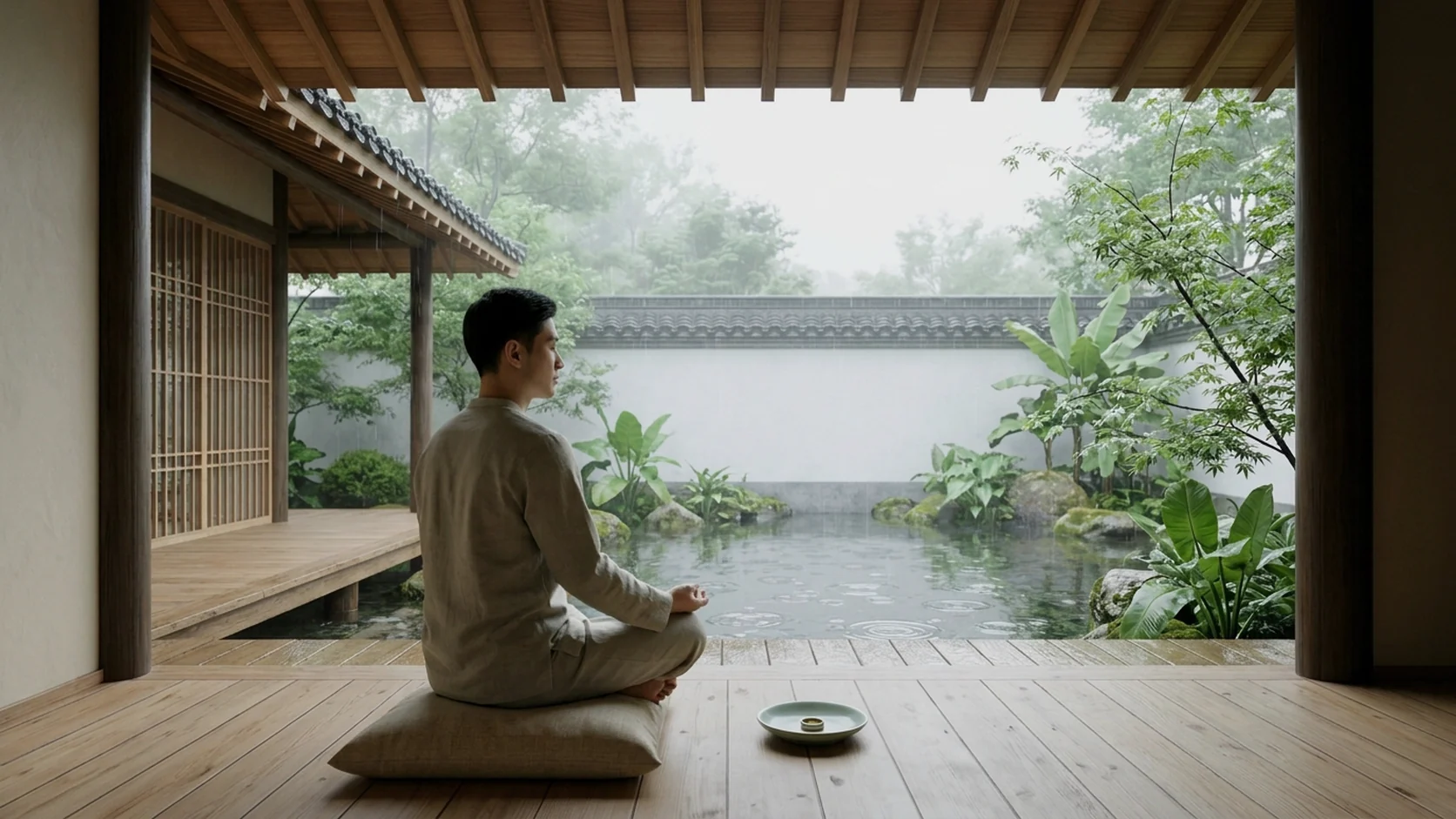
In classical China and Japan, incense was never merely fragrance—it was a living timepiece. Scholars lit slender sticks while practicing calligraphy or steeping tea; elaborate brass seal clocks (xiangzhuan, 香篆) traced powdered wood along labyrinthine paths so the hours passed in scent rather than mechanical noise.
Because burn speed responds subtly to air currents across a doorway, no two sticks are identical to the second. That slight imperfection is precisely what softens the mind: time is sensed in the room rather than audited on a screen.
Crisp rain-washed cypress · Short slender stick
Bright, clean timber notes associated with wooden bathhouses and wet temple eaves. Well suited for a brief quiet reset between stretches of work.
Sit with Hinoki →Warm wood & quiet calm · Classic stick
The quintessential yizhuxiang duration: creamy, grounding, and steady. Ideal for daily quiet sitting, journaling, or a focused chapter.
Sit with Sandalwood →Deep resinous evening trail · Spiral coil
Treasured since the Tang and Song dynasties for its contemplative depth. Shaped as a spiral coil resting on celadon, burning inward for a full unhurried hour.
Sit with Agarwood coil →As the breeze wills · Weathered stick
Each fresh stick chooses its own unannounced pace (roughly 20–40 minutes), letting you release clock-watching completely.
Sit with Driftwood →Courtyard rain · Bronze wind chime · Companion or solo
Our original wooden veranda welcomes every pace—from a brisk 15-minute Hinoki reset to an unhurried hour-long Agarwood spiral in the night rain.
Enter Rain Porch → Night Rain guide →Winter snowfall · Glowing charcoal & kettle
Deep resinous Agarwood belongs beside warm charcoal embers and silent snow outside the lattice—an anchor for winter evening reading and long-form writing.
Open Snow Hearth + Agarwood → Winter Study guide →Swaying bamboo · Soft wind & water-bamboo knock
Crisp, rain-washed Hinoki matches bright courtyard daylight, shifting bamboo shadows, and occasional hollow bamboo knocks for clean focus breaks.
Open Bamboo Tea + Hinoki → Bamboo Wind guide →Drifting leaves · Temple eaves & distant bell
Warm, steady Sandalwood honors the classic half-hour yizhuxiang measure beneath autumn temple eaves and rare distant bronze bell resonance.
Open Autumn Temple + Sandalwood → Temple Bell guide →No account or setup—touch the match and sit with the breeze.
Traditionally, yizhuxiang (一炷香, the time of one stick of incense) refers to roughly 30 minutes—though actual burn time varies with wood density, thickness, humidity, and airflow, ranging from ~15 minutes for slender cypress sticks to ~60 minutes for spiral agarwood coils.
Hinoki (Japanese cypress) is crisp, bright, and shorter-burning; Sandalwood is warm, creamy, and steady for classic half-hour sitting; Agarwood (oud) is deep and resinous, often shaped into slow-burning spiral coils for longer evening contemplation.